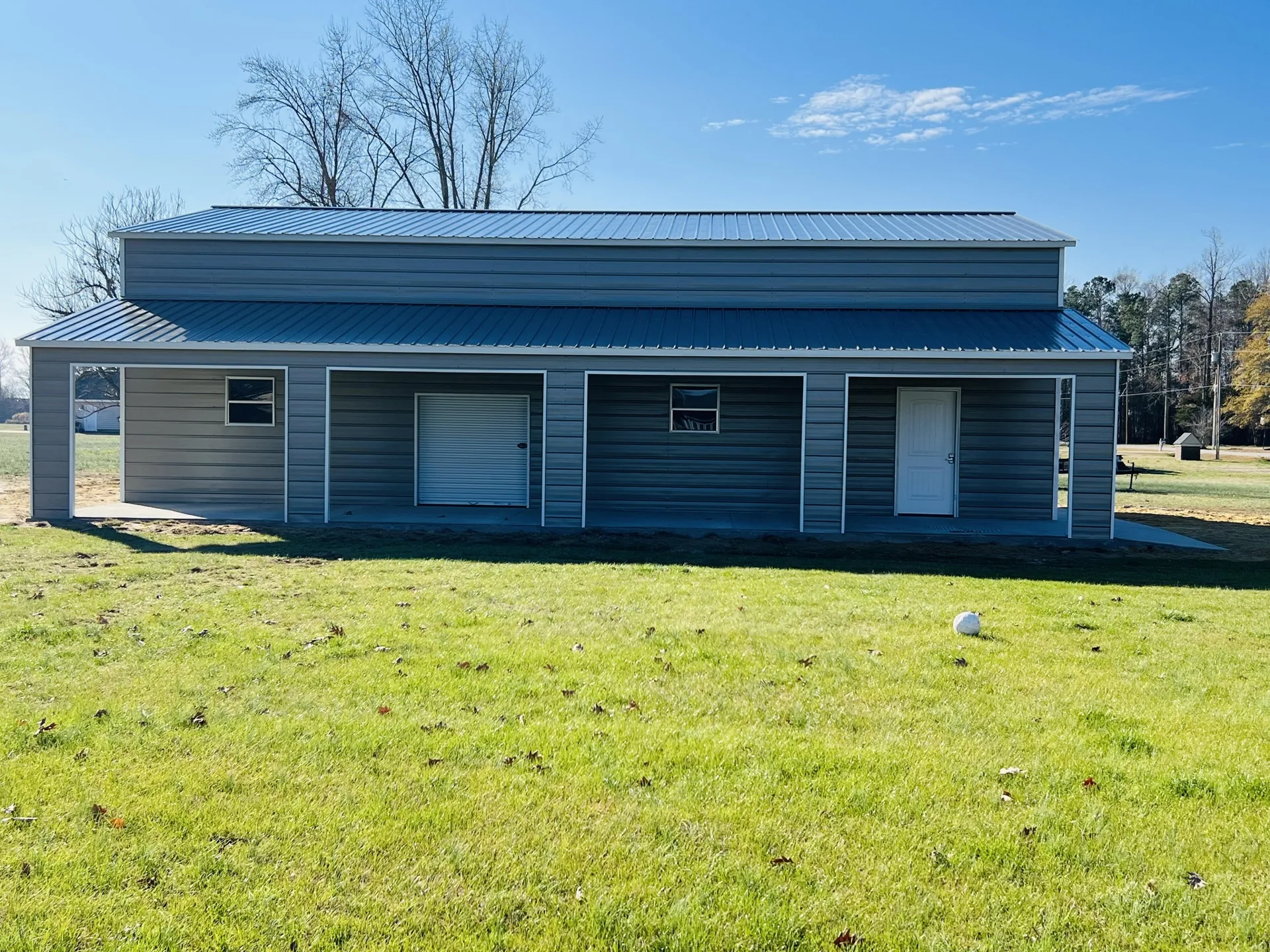
Why metal instead of shingles
A metal roof lasts several times longer than an asphalt shingle roof, sheds snow and debris rather than holding them, and does not lose granules into your gutters every storm. It costs more up front. Over a thirty-year horizon in the Southeast the comparison usually favours metal, but if you are selling the house in three years, shingles are the rational financial choice and we will say so.
The four decisions that actually matter
Gauge: 29 is standard and correct for most roofs; 26 earns its price on wide purlin spacing, hail country, or roofs you walk on. Panel length: cut-to-length means one continuous piece from ridge to eave, eliminating horizontal laps entirely. Closures: foam pieces filling the rib profile at ridge and eave, without which your peak is open along its whole length. Fasteners: painted-head screws with bonded washers, sized to your framing. Everything else is preference.
What actually fails, and when
Almost never the panel. The sequence is: washers perish under UV, screws back out with thermal cycling, water enters at fastener holes; or cheap foam closures compress permanently and wind-driven rain tracks under the ribs. Both happen years before the steel gives up. That is why we push customers toward better fasteners rather than heavier gauge — it is where the money changes the outcome.
Over shingles, or tear off first
Going over existing shingles saves tear-off labour and landfill fees, and is common across the Southeast. It requires a sound deck, longer fasteners to reach solid framing, and a check on how many layers are already up there — most jurisdictions cap it. Steel follows the plane it is fixed to, so a wavy deck stays wavy. If the deck is soft, tear off.