What gets decided in the factory
Wind and snow loads for your specific location are calculated first. Framing members are then sized to those loads — not heavier 'just in case', which is where cost gets wasted. Connections are detailed, holes are punched, panels are cut to the exact run. By the time it is on a truck, every part has a place. That is the entire efficiency argument for factory manufacture over site-built construction.
Why it erects faster
A site-built structure is figured out as it goes. A manufactured building arrives as parts that fit each other, so a standard carport or garage frequently goes up in a day. On commercial work the schedule is usually dictated by permitting and site preparation rather than by the steel, which is the opposite of conventional construction and is why manufactured buildings suit projects with fixed deadlines.
Kit versus supplied-and-erected
You can buy the manufactured package and erect it yourself or with your own crew — plenty of contractors and capable owners do. Or we deliver, anchor and erect it, included free within 100 miles of any of our 28 lots. The building is identical; the difference is who does the assembly. We are equally happy either way and will not price the kit punitively to push you toward installation.
The limits, stated plainly
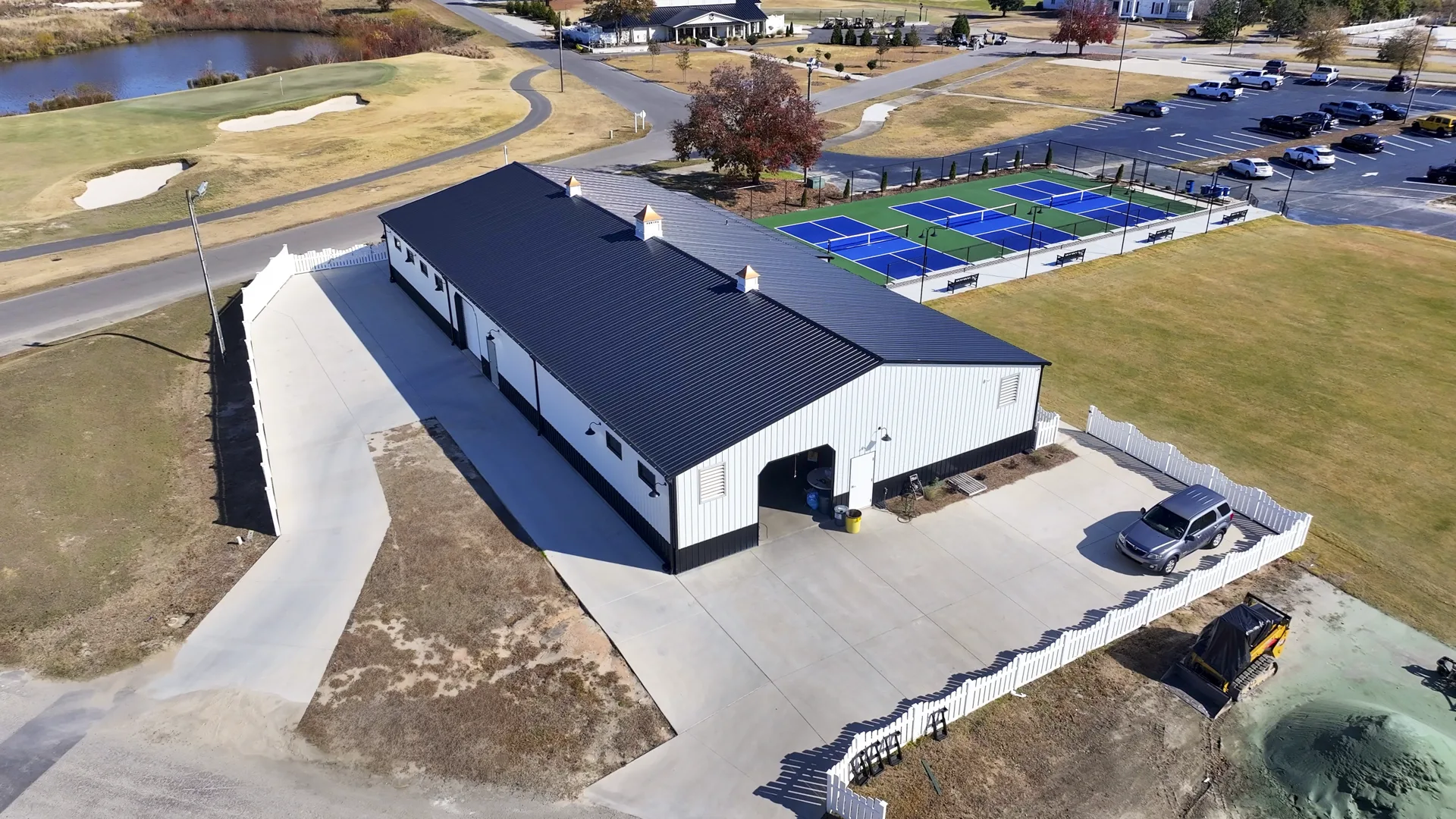
Manufactured systems suit garages, workshops, warehouses, agricultural buildings and anything where clear floor area matters more than architectural complexity. They suit poorly: unusual geometry, heavy masonry integration, and structures with demanding architectural detail. If your project is in the second group we will tell you, because a manufactured system fighting an unusual design is expensive and disappointing.