Red Flags: Signs Your Metal Building Contractor Isn't Trustworthy — METCO Metal Building Supply
Guide · Contractors · Red Flags

Red Flags: Signs Your Metal Building Contractor Isn't Trustworthy

Most metal building projects go fine, but the ones that go wrong tend to fail in the same predictable ways, and every one of them could have been caught with a document request before money changed hands. This page is not a list of villains. It is a list of checks anyone can run in an afternoon: license status, insurance certificate, a written scope, sensible deposit terms, engineered drawings, permits and lien waivers. Whether you are buying a carport in coastal Carolina, a shop in the Piedmont or a commercial shell in the Virginia mountains, the same checks apply, and a solid contractor will welcome them.

Short answer

Warning signs of an untrustworthy metal building contractor are verifiable: no license or refusal to show one, no current insurance certificate, a vague or verbal scope, a large deposit demanded before drawings exist, no engineered drawings where the county requires them, and refusal to provide lien waivers. A trustworthy contractor produces each document on request.

Get a Free Quote →📞 (252) 375-3651

Confirm the license yourself

Ask which license applies, then verify it with the state board and confirm with the county whether one is required for your project.

Call the insurance agent

Get a certificate of insurance for liability and workers' compensation and call the agent on it to confirm it is active.

Demand a written scope

Dimensions, gauges, doors, anchors, drawings, permits and cleanup, all on paper, with a change-order process.

Deposit tied to milestones

A proportionate deposit with the balance after installation and walkthrough; never full payment before delivery.

Drawings where required

A straight answer before purchase on whether the county needs certified engineered drawings and who provides them.

Lien waivers with each payment

Conditional waivers with progress payments and a final unconditional waiver when the balance is paid.

Why should you ask for a license and a current insurance certificate?

Licensing rules for building installers vary by state and by the size and value of the project, so the first check is to ask which license the contractor holds and confirm it with the state board that issues it. If the answer is that no license is needed, ask the county building office whether that is true for your project rather than taking the contractor's word. Insurance is simpler: ask for a certificate of insurance naming general liability and workers' compensation, issued by the insurer, dated within the last year. Call the agent listed on it to confirm it is active. A contractor who cannot produce a certificate is asking you to carry the risk of an injury or damage on your property. Hesitation, excuses or a photocopy that looks altered are red flags worth walking away from.

What does a trustworthy written scope and deposit structure look like?

The scope should describe the building precisely: width, length, leg height, roof style, panel and framing gauge, door and window count and sizes, colors, anchor type, and what the contractor does and does not do about foundation, site prep, permits and cleanup. It should say who is responsible for engineered drawings and what happens if the county requires changes. Deposits are normal, but the structure should be proportionate and tied to milestones, with the balance due after installation and a walkthrough. Be cautious of a demand for full payment before delivery, a deposit that jumps after the quote is signed, or pressure to pay cash for a discount. Ask how a change order is handled and get a sample. If the contractor will not put the scope in writing, there is no contract to enforce later.

Why do engineered drawings and permits matter as a trust check?

Counties across North Carolina, South Carolina and Virginia differ on whether certified engineered drawings showing the building's wind and snow load design are needed before a permit is issued, so ask the building office directly. A contractor who tells you drawings are never needed, or who suggests skipping the permit to save time, is transferring a legal and structural problem onto you. The right answer is a clear statement, before purchase, of whether your site needs certification and who supplies it. METCO tells buyers before they commit whether the county requires certified drawings and provides them where it does; METCO also manufactures, delivers and installs the shell itself, at no delivery or installation charge within 100 miles of any lot. Any seller should be able to give the same kind of straight answer about drawings and permits.

What are lien waivers and why should you ask for them?

In most states, subcontractors and material suppliers who are not paid by the contractor may be able to file a lien against your property even though you paid the contractor in full. A lien waiver is a signed statement from the contractor, and from any subcontractor or supplier, confirming they have been paid and give up the right to lien. Ask for a conditional waiver with each progress payment and a final unconditional waiver when the balance is paid. Lien law varies by state, so ask a local attorney or the county clerk how it works where you live. A contractor who has never heard of a lien waiver, or refuses to provide one, is either inexperienced or hiding a payment problem with their own suppliers. Either way, you deserve the document before the last check clears.

What behavior on the day of delivery or installation signals a problem?

Paper checks catch most problems, but a few show up on site. The crew arrives without the drawings or without knowing the building's dimensions. The steel delivered does not match the quote in size, gauge or color and the lead suggests you accept it anyway. Anchors are skipped or substituted without explanation. Bracing shown on the drawings is left off because panels will cover it. The crew asks for the balance before the building is complete or before a walkthrough. Scrap and screws are left across the site. None of these alone proves bad intent, but each deserves a pause and a written note before payment. Walk the building, compare it to the quote and drawings, and confirm the doors work. If the contractor resists a walkthrough, that resistance is the last red flag you need.
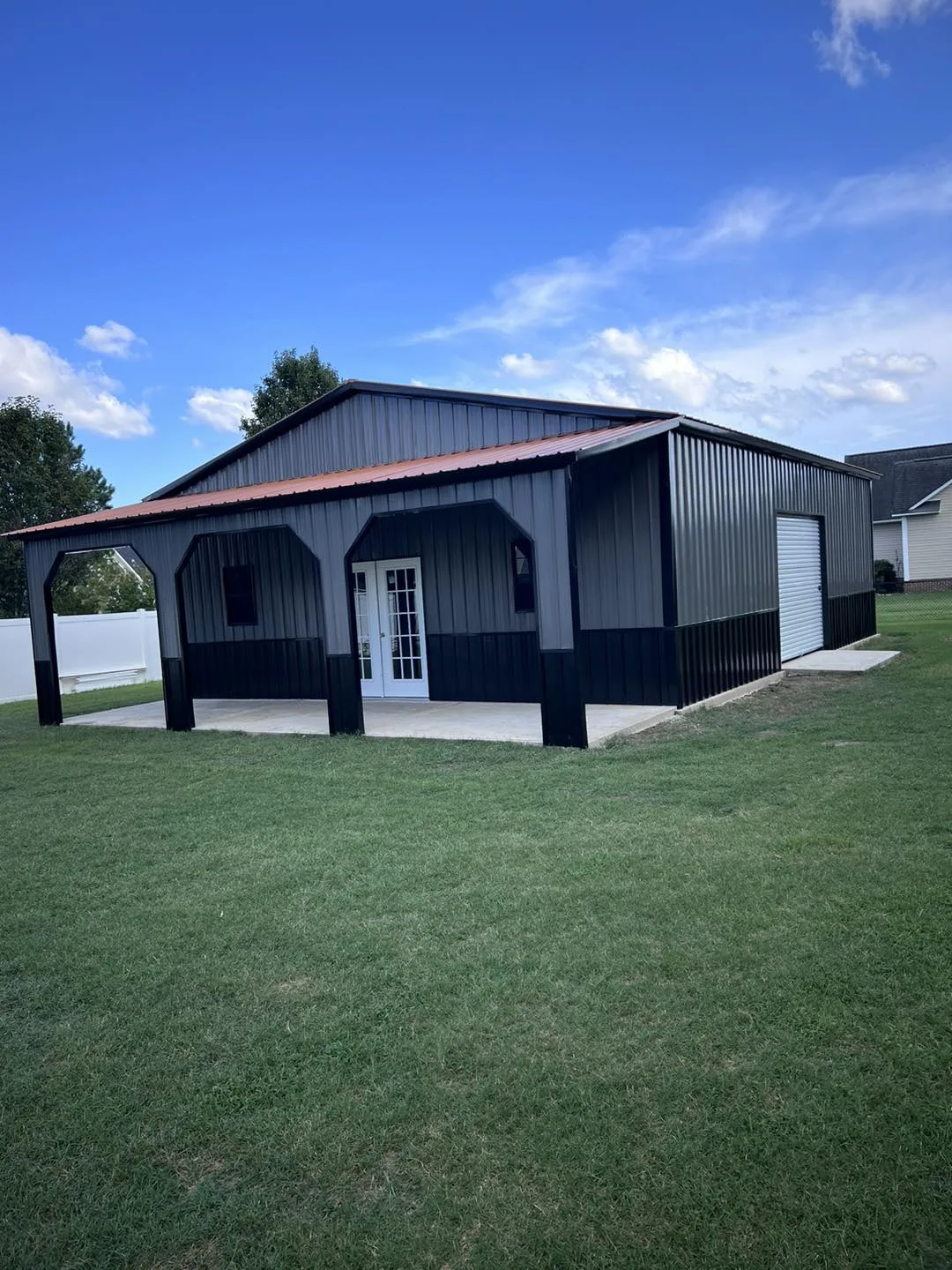
Specifications

License check
Verify with the state licensing board; rules vary by state and project
Insurance check
Certificate of insurance, confirmed by phone with the agent
Scope check
Written dimensions, gauge, doors, anchors, drawings, permits, cleanup
Payment check
Milestone deposit, balance after walkthrough, lien waivers
Drawings check
Stamped wind and snow load drawings wherever the county requires them
METCO model
Manufactures, delivers, installs the shell; free within 100 miles of any lot
METCO phone
(252) 375-3651, lots open Mon–Sat 9am–5pm

Common Questions

Is a deposit itself a red flag?

No. Deposits are normal for a manufactured building because panels are rolled to your order. The red flags are a deposit that is disproportionate, that increases after signing, that is demanded in cash, or full payment required before the steel is delivered.

How do I verify a certificate of insurance?

The certificate lists the insurance agency and policy numbers. Call the agency using a number you look up independently, not one supplied by the contractor, and ask whether the liability and workers' compensation policies are active for that business.

What if the contractor says my county does not require a permit?

Call the county building office and ask; requirements vary by county and by building size and use. If a permit is required, the contract should say who pulls it. Skipping a required permit creates problems with resale, insurance and financing later.

Do I need lien waivers if the contractor has no subcontractors?

Ask for one anyway. Material suppliers can also hold lien rights in many states, and a final unconditional waiver from the contractor costs nothing to provide. State lien law varies, so confirm the details with the county clerk or an attorney.

What should I do if I already paid and the work is wrong?

Put the defects in writing with photos, reference the written scope and drawings, and request a correction date. If the contractor does not respond, the licensing board, the insurer on the certificate and a local attorney are the next calls.

How does METCO handle these checks?

METCO manufactures the panels in Farmville, NC, delivers and installs the shell, provides certified drawings where the county requires them, and tells buyers before purchase whether their site needs certification. Ask the lot to put the full scope in writing before you sign.

Get a Real Number in 24 Hours

Tell us the size, your county and what you are storing. We quote from current steel pricing — no obligation, and we will tell you if a different size suits you better.

Request a Quote →Design It in 3D