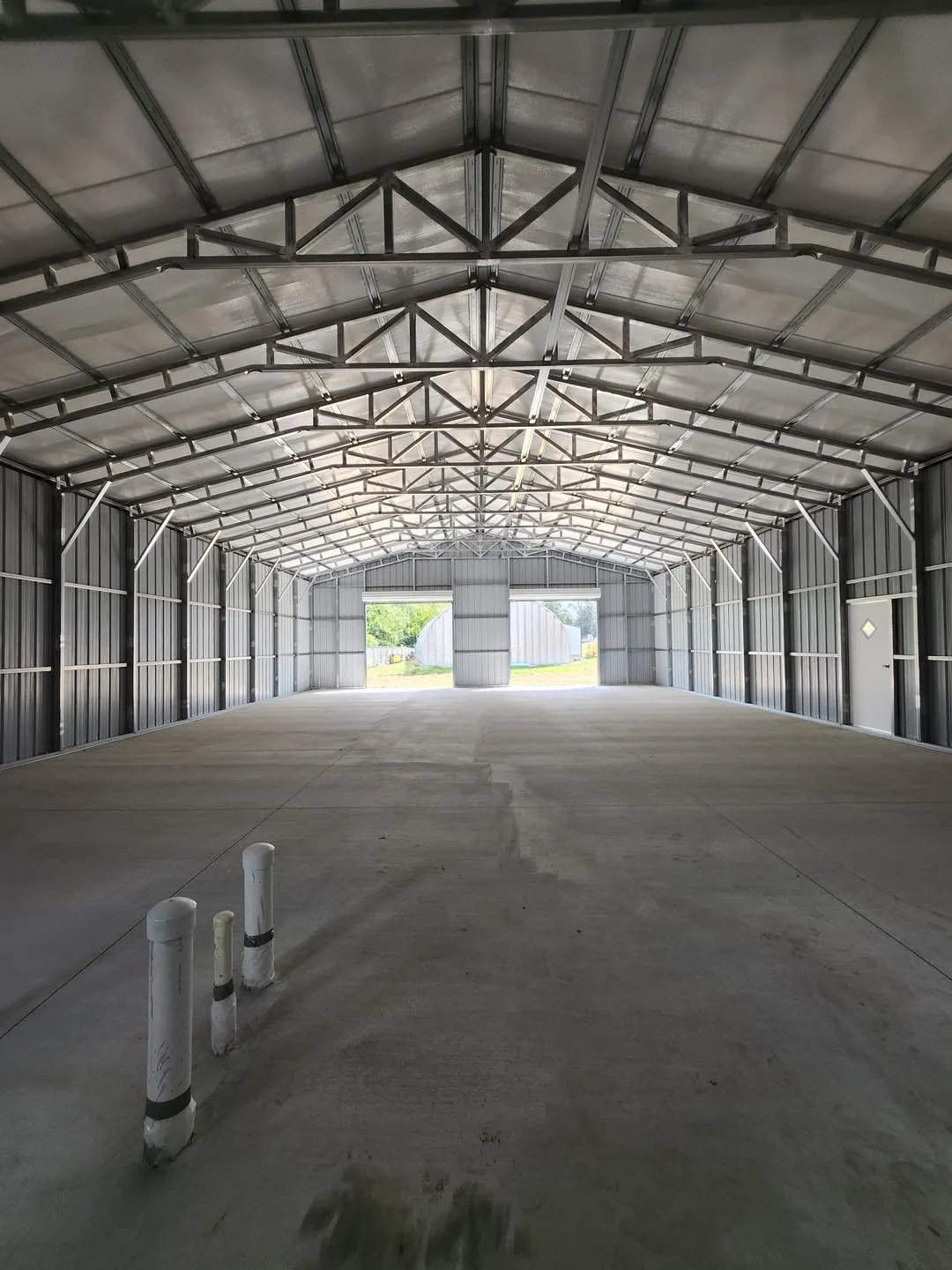
Why do metal roofs leak at fasteners and laps, and how is that fixed?
An exposed-fastener metal roof depends on a rubber washer under every screw head to seal the hole the screw makes. Sun and thermal cycling harden those washers over the years, and a screw driven at an angle or over-tightened during installation will begin leaking sooner. The fix is replacing the screw with a slightly larger diameter fastener that bites fresh metal and carries a new washer, seated straight and snug. Laps leak when the upper panel does not overlap the lower panel in the direction water runs, when side laps face into the prevailing wind, or when the foam closure strip at the eave or ridge is missing and wind-driven rain blows in under the ridge cap. Those are corrected by resealing the lap with butyl tape, adding the closure, or refastening the ridge cap. Wide-area sealant smeared over a lap is a temporary patch, not a repair.
What causes condensation drips that look exactly like a leak?
If water shows up on a clear cold morning rather than during rain, the roof is probably sweating, not leaking. Warm humid air inside the building touches roof panels that cooled overnight, and moisture condenses on the underside and drips off the ribs. Coastal and Piedmont humidity make this common, and a concrete slab that is still curing adds more moisture for months. The test is simple: check the floor after a dry, cool night. Wet spots under the ribs with no rain mean condensation. The cure is to keep interior air off the cold steel with insulation bonded to the panel or a vapor barrier on the warm side, and to ventilate with ridge vents, gable vents or a fan so damp air leaves. Screwing down a roof harder does nothing for condensation.
How do gutters and downspouts change what happens at the eave?
Without gutters, every drop that hits the roof lands in a strip along the eave, digs a trench, splashes mud onto the wall panels and soaks the ground next to the base rail and anchors. Over time that saturated soil settles, the slab edge or piers can shift, and the lowest panels and base rail sit in mud. Gutters collect that water and downspouts move it away from the building. Extend downspouts several feet out or into a buried drain so water is not simply dumped at the corner. In a heavy rain event the roof area of a wide clear-span building sheds a large volume quickly, so size the gutter and downspout count to the roof rather than copying a house. Where gutters are not used, a gravel splash strip and grading that slopes away from the building are the minimum.
How do roof pitch and orientation affect rain, snow and runoff?
Steeper pitches shed water and snow faster and give wind-driven rain less chance to work under laps. Lower pitches are common on wide buildings and work fine when laps are sealed with butyl tape and closures are in place. In the mountains of western North Carolina and southwest Virginia, snow that sits on a low-pitch roof melts from the bottom during the day and refreezes at the eave at night, which is where ice can back up under the ridge cap or eave trim. Certified engineered drawings for snow load address the structure; the drainage side is handled by pitch, closures and keeping the eave clear. Orientation matters too: point the side laps away from the prevailing wind where practical, and avoid draining a large roof toward a neighbor's lot or your own driveway. Ask the lot what it recommends for your county.
What should you inspect on the roof and around the base each season?
Twice a year, once after winter and once before hurricane season on the coast, do a short walk. From the ground, look for screws that have backed out or have rust rings around them, ridge cap sections that have lifted, and trim that has pulled away. Inside, look up on a sunny day for daylight at laps or screw holes, and check the floor after a rain and after a cold clear night to separate leaks from condensation. Clear leaves and pine straw from gutters and from the valley where a lean-to meets the main roof. Confirm downspout extensions are attached and the ground still slopes away. Check the base rail for mud or standing water and the lowest panel edge for rust. Note anything you find with a photo and a date; a single loose screw is a five-minute fix, and the same screw ignored for years is a rusted purlin.