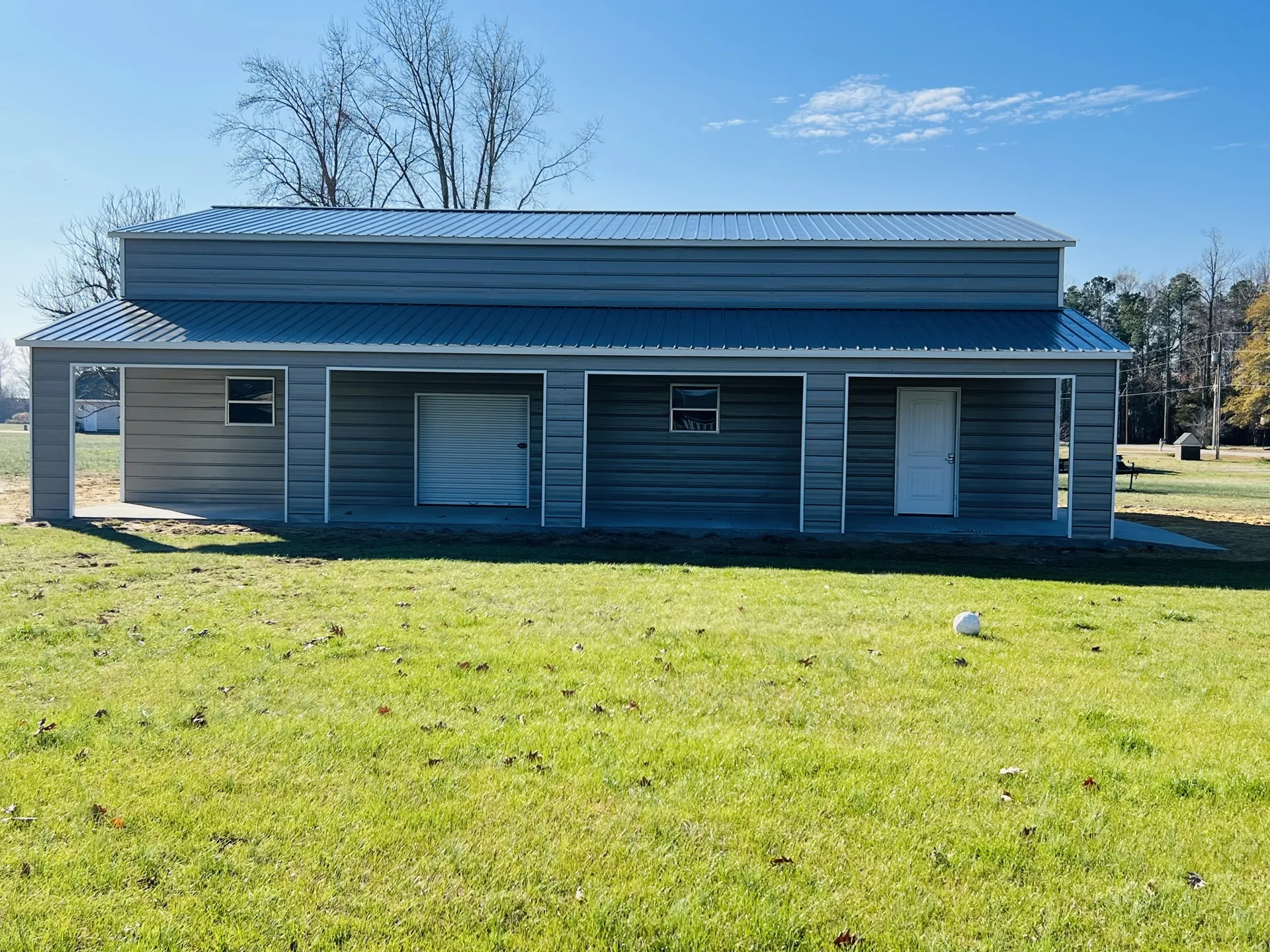
What does a twice-a-year metal building check involve?
Spring and fall are the natural checkpoints because one follows winter's ice and the other precedes it. Start on the ground: walk the perimeter and look for panel damage near the base, soil or mulch piled against the steel, and any place water pools after rain. Then look up: from a ladder at the eave, scan the roof for debris in the valleys and at the ridge, for fastener heads that have backed out or lost their washers, and for sealant at trim and penetrations that has cracked or pulled away. Inside, look for daylight at laps and at the ridge, for water stains on the framing, and for condensation drips on stored items. Test every door and opener. Note what you find with the date, and fix small items the same day; a backed-out screw is a two-minute job in spring and a leak by fall.
How do you wash a metal building without damaging the finish?
Once a year is enough inland; a plain water rinse a few times a year is worthwhile near the coast. Use a garden hose or a low-pressure washer held at a distance, mild detergent, and a soft brush on a pole for stubborn dirt, mildew or the green film that forms on the shaded north wall in humid summers. Rinse from the top down so runoff does not leave streaks. Avoid harsh solvents, abrasive pads and high-pressure nozzles held close to the panel, which can strip the paint film and open the way to rust. Do not walk on the roof; panels are strong along the ribs but dent between them, and a dented roof holds water. Wash the underside of the eaves and the trim as well, because that is where wasp nests and dirt collect out of sight. Let the building dry before closing doors on a humid day.
Which parts of a metal building wear first?
Fasteners and sealant lead the list. Screw washers weather and screws back out slightly as the panels expand and contract through hundreds of hot-cold cycles a year; a loose fastener lets water in at the one point the panel was pierced. Sealant at trim, ridge caps and around vents or pipes dries and cracks over years and should be cut out and replaced rather than smeared over. Cut panel edges, at doors and at any field-trimmed opening, are where the paint film is interrupted and rust can start, so keep them clean and touch them up if bare steel shows. Roll-up door springs, tracks and bottom seals wear with use. On the ground, anchors can loosen if the slab edge cracks or the soil around a ground anchor washes out. None of this is expensive to address early and all of it is expensive to ignore.
Does coastal salt, Piedmont humidity or mountain snow change the routine?
Yes, each in its own way. Near the coast, salt spray settles on panels and in crevices and accelerates corrosion wherever the paint or zinc is thin, so rinse with fresh water every few months, pay attention to cut edges and fastener heads, and keep the base clear of sand and vegetation that hold moisture against the steel. In the humid Piedmont, the enemy is mildew on shaded walls and condensation inside an uninsulated shell; ventilation and an annual wash handle most of it, and a vapor barrier under the slab helps more than any cleaning. In the mountains and Southwest Virginia, snow and ice are the issue: check that the roof sheds cleanly, clear drifts that pile against a taller wall or a parapet, and look for fasteners loosened by ice sliding off the panels. After any named storm, anywhere in the region, walk the building the next day.
What maintenance items should be on your list?
Keep the list short enough to actually do. Twice a year: wash the panels, clear the roof and gutters, scan fasteners and sealant, check doors, walk the base for pooling water and soil contact, and look inside for daylight or stains. After storms: check the roof for lifted panels or debris strikes and the doors for damage. Yearly: touch up any bare steel at cut edges, lubricate door hardware, and confirm gutters and downspouts carry water clear of the foundation, especially on clay that swells when wet. Every few years: replace sealant at trim and penetrations and re-tighten or replace fasteners that have lost their washers. Keep chemicals, fertilizer and road salt off bare framing, and never store them against the panels. A building manufactured from 29-gauge panels and galvanized framing, as METCO's are, and installed on a properly drained pad is designed to need little beyond this.