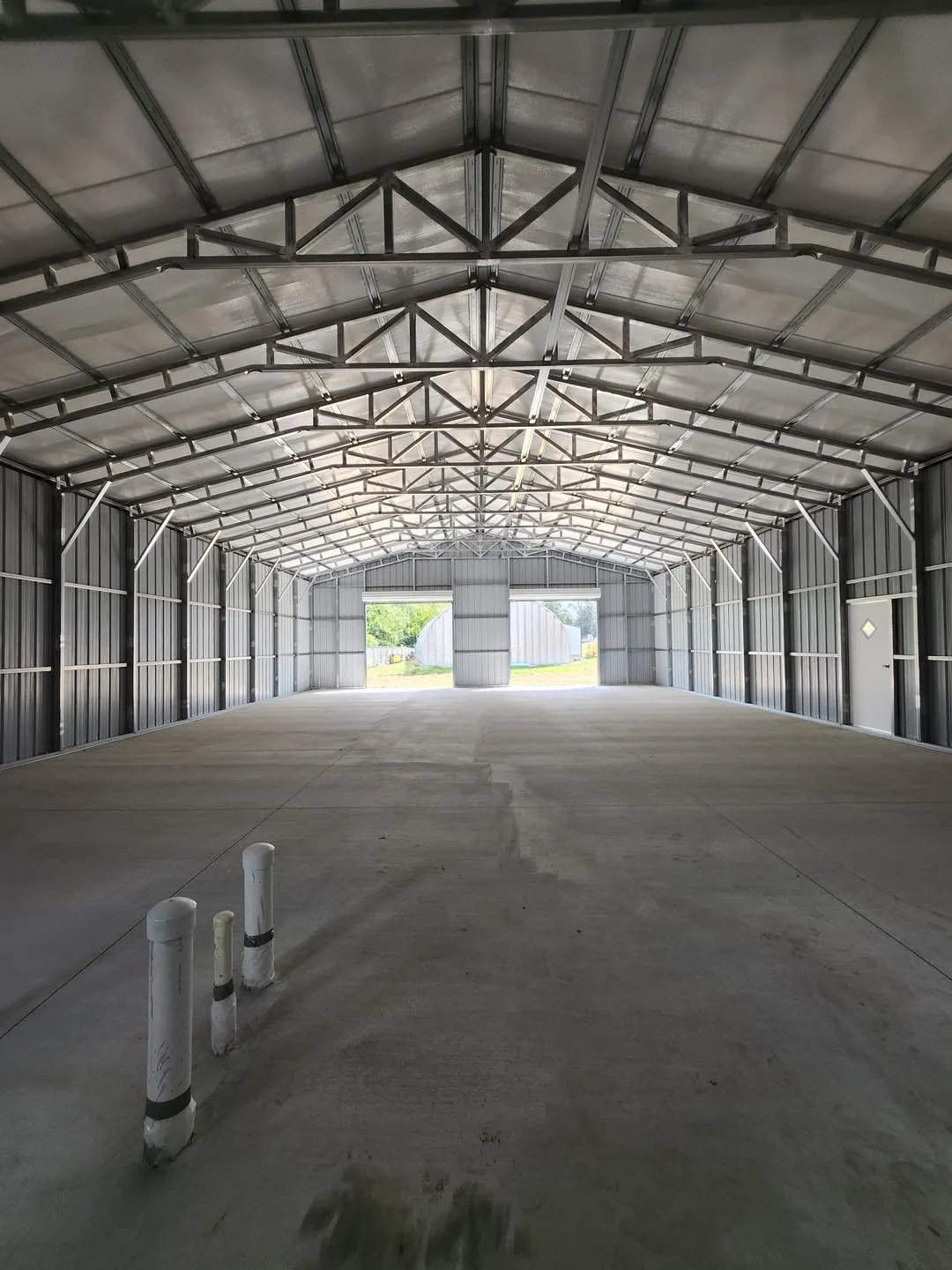
Why is undersizing the most common regret?
Buyers measure what they own today and forget that a building fills up. A garage sized for two vehicles leaves no room for a workbench, a mower, or the door swing on a truck. A shop sized for the current lift and toolbox has no aisle once a second project arrives. Height is missed as often as footprint: a lift, a tall trailer, or an RV with a rooftop air conditioner needs leg height and door height planned together, not just width. The cost of extra width or an extra foot of leg height at order time is small relative to the whole; adding on later means matching panels, tying into framing, and another installation visit. Lay out the interior on paper with actual dimensions of vehicles and equipment, add circulation space, and then choose the size.
What goes wrong with permits and certification?
Assuming that a metal building is exempt from permits is a frequent and expensive error. Whether a permit is required depends on the county, the size, the use, and sometimes the foundation type, and the rules for a carport can differ from those for a garage or a shop. Certified engineered drawings for wind and snow load may be required in coastal or mountain counties, and buying an uncertified building where certification is required can mean it cannot be inspected or, in the worst case, must be removed. Ask the inspections office before purchase and get the answer in writing. Homeowners association covenants are a separate check. Setbacks from property lines, easements, wells, and septic fields are part of the same conversation; a building placed a few feet inside a setback can be ordered moved.
How do foundation and site errors show up?
The building arrives and the slab is the wrong size, out of level, or not cured. Any of the three stops the installation. The slab dimensions and anchor pattern come from the manufacturer, and the concrete contractor needs them before forming, not after. Out-of-level pads twist the frame so doors bind and panels gap. On Piedmont clay, skipping compacted base and drainage lets the slab heave and settle with the seasons. Placing a building in a low spot where water collects, or with the roof draining toward the house, creates a permanent moisture problem. Access is the other site error: a delivery truck that cannot reach the pad because of a tight driveway, low branches, or soft ground means a rescheduled installation. Walk the route and measure the pad before delivery day.
Why do people ignore condensation and insulation until it is too late?
An uninsulated metal roof sweats. Warm, humid air, common in coastal and Piedmont summers and on cool mornings year-round, condenses on the underside of the panels and drips on whatever is below. Buyers who plan a storage building or shop often skip insulation to save money, then find rust on tools and damp on stored goods. The fixes are easier at build time: a vapor barrier beneath the slab, insulation or a radiant barrier on the roof, and ventilation. For a building that will be heated or cooled, the insulation choice determines whether it can be conditioned affordably. Decide how the building will be used and insulate for that use rather than retrofitting once the drip has already caused damage.
What should you compare between quotes besides the total?
Two quotes for the same width and length are rarely for the same building. Compare framing gauge, since 12-gauge and 14-gauge behave differently under wind and snow. Compare whether certification is included where the county requires it, whether anchors for your foundation type are specified, and how many and what kind of doors and windows are counted. Check whether delivery and installation are included or billed separately; METCO Metal Building Supply manufactures the building and METCO deliver and install it, with delivery and installation free inside a 100-mile radius of each of its 28 lots in the Carolinas and Southwest Virginia, so no separate builder is needed for the shell, but other sellers structure this differently. Ask what is not included, such as the foundation and interior finish-out, which are the customer's trades. Ask for the written warranty terms, the deposit and payment schedule, and the installation timeline before choosing.